An operating system for a national fellowship programme
A high-volume fellowship programme needed to screen applications, manage placements and disburse stipends with full accountability. We redesigned the programme's operations and built the platform that runs them.
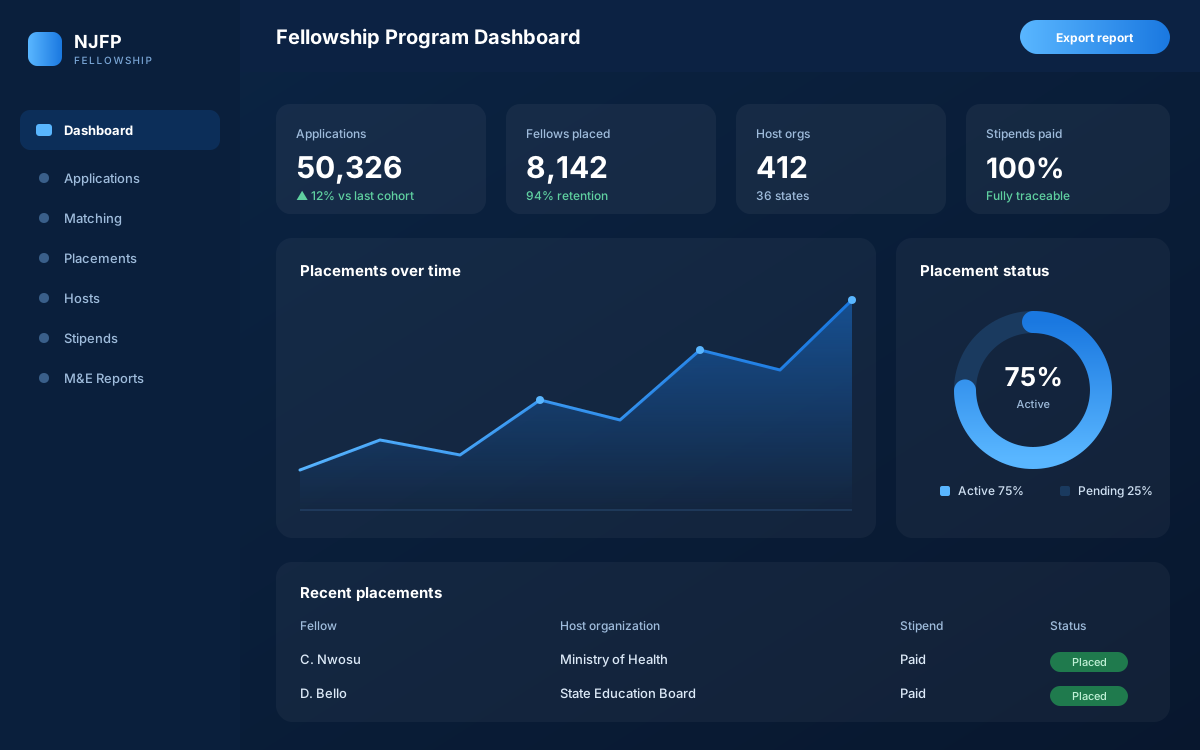
Illustrative interface — not actual client data.
Overview
The National Job Fellowship Programme connects graduates with placements across host organizations. Sozo designed and built the digital platform powering the fellowship lifecycle — application, screening, matching, placement tracking and stipend disbursement — and worked alongside the programme office through its first full cycle.
Challenge
The organizational problem, as it presented itself:
- Application volumes far exceeded what manual screening could handle.
- Placements across many host organizations had to be tracked transparently.
- Stipend disbursement required accuracy, accountability and a clear audit trail.
- Funders and government needed visibility into programme performance.
Diagnosis
What we discovered about the underlying system:
- Manual screening consumed weeks of staff time each cohort and produced inconsistent decisions.
- Placement mismatch — not stipends or logistics — was the leading driver of fellow dropout.
- Programme records and finance records disagreed because reconciliation was manual.
- Funders had no self-service view; every question became a reporting task.
Intervention
The process and operating model we redesigned — before building anything:
- Redesigned screening as a structured eligibility pipeline with human review reserved for genuine judgment calls.
- Rebuilt matching around host-organization needs and fellow profiles rather than first-come allocation.
- Unified programme and finance records so disbursement reconciles against placement and attendance automatically.
- Turned funder reporting from a periodic document into a live view.
Technology
The infrastructure built and integrated to run the redesigned system:
Adoption
How the system was introduced, tested, trained and adopted:
- 1Launched the application portal ahead of the cohort window and load-tested for surge traffic.
- 2Onboarded host organizations through guided self-service with verification workflows.
- 3Embedded a delivery team with the programme office through the first full cohort cycle.
Outcome
What changed for the organization:
- Screening moved from weeks of manual review to a structured, consistent pipeline.
- Placement tracking and stipend disbursement now reconcile automatically against a single record.
- Host organizations manage placements through their own portal.
- Programme performance is visible to funders without bespoke reporting rounds.
Lessons
- Matching quality mattered more than matching speed — algorithm plus human review beat either alone.
- Transparent stipend trails changed funder conversations from audit to strategy.
- Host organizations became the programme's best advocates once their portal experience was frictionless.
Next phase
Evolving the platform toward longitudinal outcome measurement — alumni tracking, employer integrations and evidence across cohorts.
Next case study
MMRS — Member Management & Registry System
We don't build software. We build better-functioning organizations.
Your organization may not need another tool. It may need a better system.
If you're dealing with fragmented processes, repetitive work, poor visibility, disconnected data or challenges scaling operations, let's understand the problem before deciding what to build.